The Who feat. M Evans - You Alkali Better You Bet Metals Tube. Duration : 3.75 Mins.
The Who with You Better You Bet in 1981. As well as being the guitarist and songwriter for The Who, Pete Townshend is a keen sausage and chips seperater, and likes salt (like you put it on your chips). Sprinklers throughout.
KINDLE FREE FOR ALL: How to Get Millions of Free Kindle Books and Other Free Content With or Without an Amazon Kindle (NEW and UP-TO-DATE: MAY 2011 - For ... Latest Generation Kindles and Kindle Apps) Best
Rate This Product :
KINDLE FREE FOR ALL: How to Get Millions of Free Kindle Books and Other Free Content With or Without an Amazon Kindle (NEW and UP-TO-DATE: MAY 2011 - For ... Latest Generation Kindles and Kindle Apps) Overview
The most complete and up-to-date resource yet for getting free content for your Kindle Fire, Kindle Touch, Kindle Keyboard, Kindle, Kindle DX, and Kindle Apps. Revised November 2011. By Stephen Windwalker, editor of the #1 blog and newsletter for Kindle owners, Kindle Nation Daily. Includes information on Kindle Nation Daily's magical free book search tool and weekly Kindle giveaway sweepstakes.
Prices apply to U.S. Kindle Store customers, but this book also contains resources that will help customers around find millions of free books and other free content for their Kindles and Kindle apps.
TABLE OF CONTENTS Ch 1: How Can This Be? Amazon May Be Making Billions, But Kindle is the Key to "Free" Between the Chapters, and Just Between Us: Best Resources for Kindle Owners Ch 2: Use Kindle Nation Daily's Free Book Alerts Between the Chapters, and Just Between Us: No Kindle Required! How to Download and Use Free Kindle Apps for the PC, Mac, iPad, iPhone, iPod Touch, BlackBerry, Android and, Soon, the Windows Phone 7 and Other Devices Ch 3: Find and Download Thousands of Free Books Directly From the Kindle Store Between the Chapters, and Just Between Us: Using Wi-Fi, 3G, or a USB Cable to Connect Your Kindle Ch 4: Find and Download Free Books From Kindle-Compatible Free Book Collections Between the Chapters, and Just Between Us: Easily Find Free Kindle Store Classics Arranged by Author and Title Ch 5: Find and Download Free Book Samples and Free 14-Day Periodical Trials From the Kindle Store Between the Chapters, and Just Between Us: Free for You: How to Ask for and Use a Kindle Gift Certificate Ch 6: Use Calibre to Manage Your Kindle's Free Books and Other Kindle Content Between the Chapters, and Just Between Us: Email eBooks, Memoranda, Scripts, Manuscripts, Directions, Recipes, Legal Briefs and Other Personal Documents to Your Kindle Ch 7: Read Blogs, Periodicals, and Other Web Content for Free on the Kindle Between the Chapters, and Just Between Us: Use eReadUps to Collect Research on Your Kindle or Build Your Own eBooks from Web Sources Ch 8: Why Your Kindle's Free Wireless Web Browser is a Revolutionary Feature, and May Be the Key to What's Next from Amazon Between the Chapters, and Just Between Us: Use Your Kindle to Check Your eMail Ch 9: Unlock the World Of Free Audio on the Kindle Between the Chapters, and Just Between Us: How to Contact Kindle Nation Ch 10: Ten Reasons the New Kindle 3 or Kindle Wi-Fi Is a Must if You Love to Read ... And a Few Minor Drawbacks Between the Chapters, and Just Between Us: Kindle Periodicals and Your Battery Ch 11: The Politics of "Free" Books In the Age of the Kindle Between the Chapters, and Just Between Us: The Future of Free in the Kindle Store Ch 12: The Myth of the Kindle's "Standard" .99 Price, the Agency Model, and the ABCs of Kindle Store Pricing About the Author Stephen Windwalker publishes the popular Kindle Nation Daily blog and is the author of several books of fiction and nonfiction. He has been writing about Amazon's book-business innovations since 2002 and about the Kindle since the week it was launched. His Kindle guide was the #1 bestselling book in the Kindle Store for 2008 and has sold well over 100,000 copies in various editions around the world. He studied with Kurt Vonnegut and Robert Lowell and was the fiction editor of the Harvard Advocate literary magazine in the 1970s, founded a popular Boston bookstore in the 1980s, and ran marketing for Inc. Magazine's ancillary book, video, and software business in the 1990s.
KINDLE FREE FOR ALL: How to Get Millions of Free Kindle Books and Other Free Content With or Without an Amazon Kindle (NEW and UP-TO-DATE: MAY 2011 - For ... Latest Generation Kindles and Kindle Apps) Specifications
The most complete and up-to-date resource yet for getting free content for your Kindle Fire, Kindle Touch, Kindle Keyboard, Kindle, Kindle DX, and Kindle Apps. Revised November 2011. By Stephen Windwalker, editor of the #1 blog and newsletter for Kindle owners, Kindle Nation Daily. Includes information on Kindle Nation Daily's magical free book search tool and weekly Kindle giveaway sweepstakes.
Prices apply to U.S. Kindle Store customers, but this book also contains resources that will help customers around find millions of free books and other free content for their Kindles and Kindle apps.
TABLE OF CONTENTS Ch 1: How Can This Be? Amazon May Be Making Billions, But Kindle is the Key to "Free" Between the Chapters, and Just Between Us: Best Resources for Kindle Owners Ch 2: Use Kindle Nation Daily's Free Book Alerts Between the Chapters, and Just Between Us: No Kindle Required! How to Download and Use Free Kindle Apps for the PC, Mac, iPad, iPhone, iPod Touch, BlackBerry, Android and, Soon, the Windows Phone 7 and Other Devices Ch 3: Find and Download Thousands of Free Books Directly From the Kindle Store Between the Chapters, and Just Between Us: Using Wi-Fi, 3G, or a USB Cable to Connect Your Kindle Ch 4: Find and Download Free Books From Kindle-Compatible Free Book Collections Between the Chapters, and Just Between Us: Easily Find Free Kindle Store Classics Arranged by Author and Title Ch 5: Find and Download Free Book Samples and Free 14-Day Periodical Trials From the Kindle Store Between the Chapters, and Just Between Us: Free for You: How to Ask for and Use a Kindle Gift Certificate Ch 6: Use Calibre to Manage Your Kindle's Free Books and Other Kindle Content Between the Chapters, and Just Between Us: Email eBooks, Memoranda, Scripts, Manuscripts, Directions, Recipes, Legal Briefs and Other Personal Documents to Your Kindle Ch 7: Read Blogs, Periodicals, and Other Web Content for Free on the Kindle Between the Chapters, and Just Between Us: Use eReadUps to Collect Research on Your Kindle or Build Your Own eBooks from Web Sources Ch 8: Why Your Kindle's Free Wireless Web Browser is a Revolutionary Feature, and May Be the Key to What's Next from Amazon Between the Chapters, and Just Between Us: Use Your Kindle to Check Your eMail Ch 9: Unlock the World Of Free Audio on the Kindle Between the Chapters, and Just Between Us: How to Contact Kindle Nation Ch 10: Ten Reasons the New Kindle 3 or Kindle Wi-Fi Is a Must if You Love to Read ... And a Few Minor Drawbacks Between the Chapters, and Just Between Us: Kindle Periodicals and Your Battery Ch 11: The Politics of "Free" Books In the Age of the Kindle Between the Chapters, and Just Between Us: The Future of Free in the Kindle Store Ch 12: The Myth of the Kindle's "Standard" .99 Price, the Agency Model, and the ABCs of Kindle Store Pricing About the Author Stephen Windwalker publishes the popular Kindle Nation Daily blog and is the author of several books of fiction and nonfiction. He has been writing about Amazon's book-business innovations since 2002 and about the Kindle since the week it was launched. His Kindle guide was the #1 bestselling book in the Kindle Store for 2008 and has sold well over 100,000 copies in various editions around the world. He studied with Kurt Vonnegut and Robert Lowell and was the fiction editor of the Harvard Advocate literary magazine in the 1970s, founded a popular Boston bookstore in the 1980s, and ran marketing for Inc. Magazine's ancillary book, video, and software business in the 1990s.
Customer Reviews
*** Product Information and Prices Stored: Jan 28, 2012 13:04:24
Langston Hughes stands as a literary and cultural translation of the political resistance and campaign of black consciousness leaders such as Martin Luther King to restore the ownership of the black citizenry thus fulfilling the ethos of the American dream, which is renowned universally every year colse to February to April.
Hughes' overriding sense of a social and cultural purpose tied to his sense of the past, the gift and the hereafter of black America commends his life and works as having much to learn from to inspire us to move transmit and to clue and guide our steps as we move transmit to originate a great future.
Audio Books Online For Free
Hughes is also necessary since he seems to have conveniently spanned the genres: poetry, drama, novel and commentary leaving an indelible stamp on each. At 21 years of age he had published in all four (4) areas. For he all the time determined himself an artist in words who would venture into every singular area of literary creativity, because there were readers for whom a story meant more than a poem or a song lyric meant more than a story and Hughes wanted to reach that private and his kind.
Langston Hughes - The Life, Times, Works as Well as Impact of a Versatile African-American Writer
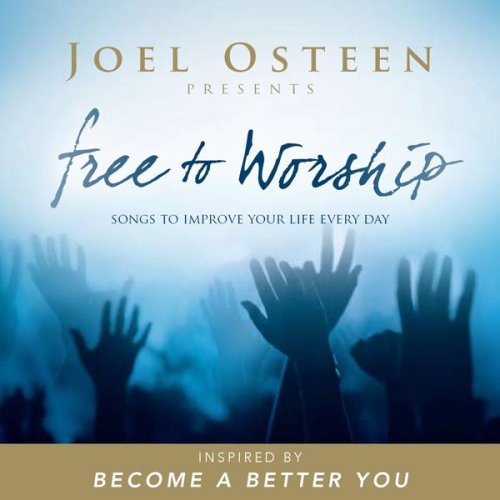
Free To Worship: Songs To Improve Your Life Every Day Best
Rate This Product :
Free To Worship: Songs To Improve Your Life Every Day Overview
Eleven Songs to Improve your life every day!
Customer Reviews
*** Product Information and Prices Stored: Jan 25, 2012 01:30:27
But first and foremost, he determined himself a poet. He wanted to be a poet who could address himself to the concerns of his citizen in poems that could be read with no formal training or uncut literary background. In spite of this Hughes wrote and staged dozens of short stories, about a dozen books for children, a history of the National relationship for the Advancement of Coloured Peoples (Naacp), two volumes of autobiography, opera libretti, song lyrics and so on. Hughes was driven by a sheer reliance in his versatility and in the power of his craft.
Hughes" commitment to Africa was real and concretized in both words and deeds. The fact of his Negro-ness (though light-complexioned) has aroused in him a desire to challenge those from the other side of the color line that reject it:
My old man's a white old man
And my old mother's black
My old ma died in a fine big house
My mad died in a shack
I wonder where I'm gonna die
Being neither white nor black?
His hunt for his roots was given impetus when in 1923 Hughes met and heard Marcus Garvey exhort Negroes to go back to Africa to flee the wrath of the white man. Hughes then became one of the poets who understanding they felt the beating of the jungle tom-toms in the Negroes' pulse. Their verse took on a nostalgic mood, and some even imagined that they were infusing the rhythms of African dancing and music into their verse like we could sense in the reading of this poem: 'Danse Africaine':
The low beating of the tom toms,
The slow beating of the tom toms,
Low ...slow
Slow ...low -
Stirs your blood.
Dance!
A night-veiled girl
Whirls softly into a
Circle of light.
Whirls softly ...slowly,
Born in Joplin, Missouri in 1902, Hughes grew up in Lawrence, Kansas and Lincoln, Illinois, before going to high school in Cleveland, Ohio in of which places, he was part of a small community of blacks to whom he was nevertheless profoundly attached from early in his life. Though descending from a considerable family his infancy was disrupted by the disunion of his parents not long after his birth. His father then emigrated to Mexico where he hoped to gain the success that had eluded him in America. The color of his skin, he had hoped, would be less of a observation in determining his hereafter in Mexico. There, he broke new ground. He gained success in company and lived the rest of his life there as a flourishing attorney and landowner.
In contrast, Hughes' mother lived the transitory life base for black mothers often leaving her son in the care of her mother while searching for a job.
His maternal grandmother, Mary Langston, whose first husband had died at Harpers Ferry as a member of John Brown's band, and whose second husband (Hughes's grandfather) had also been a militant abolitionist. Instilled in Hughes a sense of dedication most of all. Hughes lived successively with family friends, then assorted relatives in Kansas.
Another leading family shape was John Mercer Langston, a brother of Hughes's grandfather who was one of the best-known black Americans of the nineteenth century.
Hughes later joined his mother even though she was now with his new stepfather in Cleveland, Ohio. At the same time, Hughes struggled with a sense of desolation fostered by parental neglect. He himself recalled being driven early by his loneliness 'to books, and the amazing world in books.' He became disillusioned with his father's materialistic values and contemptuous reliance that blacks, Mexicans and Indians were lazy and ignorant.
At Central High School Hughes excelled academically and in sports. He wrote poetry and short fiction for the school's literary magazine and edited the school year book. He returned to Mexico where he taught English briefly and wrote poems and prose pieces for publication in The accident the magazine of the Naacp.
Aided by his father, he arrived in New York in 1921 ostensibly to attend Columbia University but genuinely it was to see Harlem. One of his many poems, "The Negro Speaks of Rivers" had just been published in The Crisis. His talent was immediately spotted though he only lasted one year at Columbia where he did well but never felt comfortable.
On campus, he was subjected to bigotry. He was assigned the worst dormitory room because of his color. Classes in English literature were all he could endure. Instead of attending classes which he found boring he would frequent shows, lectures and readings sponsored by the American Socialist Society. It was then that he was first introduced to the laughter and pain, hunger and heartache of blues music. It was the night life and culture that lured him out of college. Those sweet sad blues songs captured for him the intense pain and yearning that he saw colse to him, and that he incorporated into such poems as "The Weary Blues".
To keep himself going as a poet and hold his mother, Hughes served in turn as: a delivery boy for a florist; a vegetable farmer and a mess boy on a ship up the Hudson River. As part of a merchant steamer crew he sailed to Africa. He then traveled the same way to Europe, where he jumped Ship in Paris only to spend several months working in a night-club kitchen and then wandering off to Italy.
By 1924 his poetry which he had all along been working on showed the considerable sway of the blues and jazz. His poem "The Weary Blues" which best exemplifies this sway helped initiate his occupation when it won first prize in the poetry section of the 1925 literary contest of occasion magazine and also won an additional one literary prize in Crisis.
This landmark poem, the first of any poet to make use of that basic blues form is part of a volume of that same title whose entire range reflects the frenzied atmosphere of Harlem nightlife. Most of its selections just as "The Weary Blues" approximate the phrasing and meter of blues music, a genre popularized in the early 1920s by rural and urban blacks. In it and such other pieces as "Jazzonia" Hughes evoked the frenzied hedonistic and glittering atmosphere of Harlem's renowned night-clubs. Poetry of social commentary such as "Mother to Son" show how hardened the blacks have to be to face the innumerable hurdles that they have to battle through in life.
Hughes' earliest influences as a mature poet came interestingly from white poets. We have Walt Whitman the man who through his artistic violations of old conventions of poetry opened the boundaries of poetry to new forms like free verse. There is also the extremely populist white German Émigré Carl Sandburg, who as Hughes' " guiding star," was decisive in leading him toward free verse and a radically democratic modernist aesthetic
But black poets Paul Laurence Dunbar, a expert of both dialect and approved verse, and Claude McKay, the black radical socialist an emigre from Jamaica who also wrote terminated lyric poetry, stood for him as the embodiment of the cosmopolitan and yet racially confident and committed black poet Hughes hoped to be. He was also indebted to older black literary figures such as W.E.B. Dubois and James Weldon Johnson who admired his work and aided him. W.E.B. Dubois' range of Pan-Africanist essays Souls of Black Folks has markedly influenced many black writers like Hughes, Richard Wright and James Baldwin.
Such colour-affirmative images and sentiments as that in "people": The night is beautiful,/So the faces of my citizen and in 'Dream Variations: Night arrival tenderly,/ Black like me. Endeared his work to a wide range of African Americans, for whom he delighted in writing,.
Hughes had all the time shown his measurement to experiment as a poet and not slavishly supervene the tyranny of tight stanzaic forms and exact rhyme. He seemed, like Watt Whitman and Carl Sandburg, to prefer to write verse which captured the realities of American speech rather than "poetic diction", and with his ear especially attuned to the varieties of black American speech.
"Weary Blues" combines these assorted elements the base speech of ordinary people, jazz and blues music and the customary forms of poetry adapted to the African American and American subjects. In his adaptation of customary poetic forms first to jazz then to blues sometimes using dialect but in a way radically distinct from earlier writers, Hughes was well served by his early experimentation with a loose form of rhyme that oftentimes gave way to an inventively rhythmic free verse:
Ma an ma baby
Got two mo' ways,
Two mo' ways to do de buck!
Even more radical experimentation with the blues form led to his next collection, Fine Clothes to the Jew. Possibly his finest singular book of verse, together with several ballads, Fine Clothes was also his least favourably welcomed.
Several reviewers in black newspapers and magazines were distressed by Hughes' fearless and, 'tasteless' evocation of elements of lower-class black culture, together with its sometimes raw eroticism, never before treated in serious poetry.
Hughes expressing his measurement to write about such citizen and to experiment with blues and jazz wrote in his essay "The Negro Artist and the Racial Mountain." Published in the Nation in 1926
'We younger artists...intend to express our private dark-skinned selves Without fear or shame. If white citizen are pleased we are glad. If they Are not, it doesn't matter. We know we are beautiful, And ugly too.'
Hughes expressed his measurement to write fearlessly, shamelessly and unrepentantly about low-class black life and citizen inspite of opposition to that. He also exercised much leisure in experimenting with blues as well as jazz.
The tom-tom cries and the tom-tom laughs. If coloured citizen are pleased we are glad. If they are not their displeasure doesn't matter either. We build our temples for tomorrow, strong as we know how and we stand on top of the mountains, free within ourselves.
With his espousal of such thoughts defending the leisure of the black writer Hughes became a beacon of light to younger writers who also wished to voice their right to contemplate and exploit assertedly degraded aspects of black people. He thus in case,granted the movement with a manifesto by so skillfully arguing the need for both race pride and artistic independence in this his most memorable essay,
In 1926 Hughes returned to school in the historically black Lincoln University in Pennsylvania where he continued publishing poetry, short stories and essays in mainstream and black-oriented periodicals
In 1927 together with Zora Neal Hurston and other writers he founded Fire a literary journal devoted to African -American culture and aimed at destroying the older forms of black literature. The venture itself was short-lived. It was engulfed in fire along with its editorial offices.
Then a 70 - year old wealthy white patron entered his life. Charlotte Osgood Mason, who started directing virtually every aspect of Hughes' life and art. Her passionate reliance in parapsychology, intuition and folk culture was brought into supervising the writing of Hughes' novel: Not Without Lauqhter in which his boyhood in Kansas is drawn to depict the life of a sensitive black child, Sandy, growing up in a representative, middle-class.mid-western African-American home.
Hughes' relationship with Mason came to an explosive end in 1930. Hurt and baffled by Mason's rejection, Hughes used money from a prize to spend several weeks recovering in Haiti. From the intense personal unhappiness and depression into which the break had sunk him.
Back in the U.S., Hughes made a sharp turn to the political left. His verses and essays were now being published in New Masses, a journal controlled by the Communist Party. Later that year he began touring.
The renaissance which was long over was substituted for Hughes by a sense of the need for political struggle and for an art that reflected this radical approach. But his career, unlike others then, genuinely survived the end of that movement. He kept on producing his art in keeping with his sense of himself as a fully professional writer. He then published his first collections, the often acerbic and even embittered The Ways of White Folks.
Hughes' main concern was now, the theatre. Mulatto, his drama of race-mixing and the South was the longest running play by an African American on Broadway until Lorraine Hansberry's A Raisin in the Sun appeared in the 1960's. His dramas - comedies and ramas of domestic black American life, largely - were also beloved with black audiences. Using such innovations as theatre-in-the-round and invoking audience participation, Hughes expected the work of later avant-garde dramatists like Amiri Baraka and Sonia Sanchez. In his drama Hughes combines urban dialogue, folk idioms, and a thematic emphasis on the dignity and drive of black Americans.
Hughes wrote other plays, together with comedies such as minute Ham (1936) and a historical drama, Emperor of Haiti (1936) most of which were only moderate successes. In 1937 he spent several months in Europe, together with a long stay in besieged Madrid. In 1938 he returned home to found the Harlem Suitcase Theater, which staged his agitprop drama Don't You Want to Be Free? employing several of his poems, vigorously blended black nationalism, the blues, and socialist exhortation. The same year, a socialist organization published a pamphlet of his radical verse, "A New Song."
With the start of World War Ii, Hughes returned to the political centre. The Big Sea, his first volume of his autobiography work with its memorable portrait of the renaissance and his African voyages written in an episodic, lightly comic style with virtually no mention of his leftist sympathies appeared.
In his book of verse Shakespeare in Harlem (1942) he once again sang the blues. On the other hand, this collection, as well as another, his Jim Crow's Last Stand (1943), strongly attacked racial segregation.
In poetry, he revived his interest in some of his old themes and forms, as in Shakespeare in Harlem (1942).the South and West, taking poetry to the people. He read his poems in churches and in schools. He then sailed from New York for the Soviet Union. He was among a band of young African-Americans invited to take part in a film about American race relations.
This filmmaking venture, though unsuccessful, proved instrumental to enhancing his short story writing. For whilst in Moscow he was struck by the similarities between D. H. Lawrence's character in a title story from his range The Lovely Lady and Mrs Osgood Mason. Overwhelmed by the power of Lawrence's stories, Hughes began writing short fiction of his. On his return to the U. S.. By 1933 he had sold three stories and had begun compiling his first collection.
Perhaps his finest literary achievement while the war came in writing a weekly column in the Chicago Defender from 1942 to 1952. The feature of which was an offbeat Harlem character called Jesse B. Semple, or Simple, and his exchanges with a staid narrator in a neighborhood bar, where uncomplicated commented on a range of matters but in general about race and racism. uncomplicated became Hughes's most renowned and beloved fictional creation. And one of the freshest, most spicy and enduring Negro characters in American fiction Jesse B Simple, is a Harlem Everyman, whose comic manner hardly obscured some of the serious themes raised by Hughes in relating Simple's exploits in the quintessential "wise-fool' whose palpate and uneducated insights capture the frustrations of being black in America.. His honest and unsophisticated eye sees through the shallowness, hypocrisy and phoniness of white and black Americans alike. From his stool at Paddy's Bar, in a delightful brand of English, uncomplicated comments both wisely and hilariously on many things but principally on race and women.
His bebop-shaped poem Montage of a Dream Deferred (1991) projects a changing Harlem, fertile with humanity but in decline. In it, the drastically deteriorated state of Harlem in the 1950s is contrasted to the Harlem of the 20s. The exuberance of night-club life and the vitality of cultural renaissance has now gone. An urban ghetto plagued by poverty and crime has taken its place. A convert in rhythm parallels the convert in tone. The flat patterns and gentle melancholy of blues music are substituted by the abrupt, fragmented structure of post-war jazz and bebop. Hughes was alert to what was happening in the African-American world and what was coming. This is why this volume of verse reflected so much the new and relatively new be-bop jazz rhythms that emphasized dissonance They thus reflected the new pressures that were straining the black communities in the cities of the North.
Hughes' living much of his life in basements and attics brought much realism and humanity to his writing especially his short stories. He thus remained close to his vast social as he kept spicy figuratively through the basements of the world where his life is thickest and where base citizen struggle to make their way. At the same time, writing in attics, he rose to the long perspective that enabled him to radiate a humanizing, beautifying, but still rigorous light on what he saw.
Hughes' short stories reflect his entire purpose as a writer. For his art was aimed at interpreting "the attractiveness of his own people," which he felt they were taught either not to see or not to take pride in. In all his stories, his humanity, his rigorous and artistic presentations of both racial and national truth - his flourishing mediation between the beauties and the terrors of life colse to him all shine out. confident themes, technical excellencies or social insights loom out.
"Slave in the Block" for example, a uncomplicated but vivid tale reveals the lack of respect and even human communication, between Negroes and those patronizing and cosmetic whites.
Hughes also took time to write for children producing the flourishing Popo and Fifina (1932), a tale set in Haiti with Arna Bontemps. He finally published a dozen children's books, on subjects such as jazz, Africa, and the West Indies. Proud of his versatility, he also wrote a commissioned history of the Naacp and the text of a much praised pictorial history of black America The Sweet Flypaper of Life (1955), where he explicated photographs of Harlem by Roy DeCarava, which was judged masterful by reviewers, and confirmed Hughes's prestige for an unrivaled command of the nuances of black urban culture.
Hughes's suffered constant harassment about his ties to the Left. In vain he protested he had never been a Communist having severed all such links. In 1953 he was subjected to social humiliation at the hands of Senator Joseph McCarthy, when he was forced to appear in Washington, D.C., and testify officially about his politics. Hughes denied that he had ever been a communist but conceded that some of his radical verse had been ill-advised.
Hughes's occupation hardly suffered from this. Within a short time McCarthy himself was discredited. Hughes now wrote at length in I Wonder as I gad (1956), his much-admired second volume of autobiography. About his years in the Soviet Union. He became prosperous, although he all the time had to work hard for his portion of prosperity. In the 1950s he turned to the musical stage for success, as he sought to repeat his major success of the 1940s, when Kurt Weill and Elmer Rice had chosen him as the lyricist for their street Scene (1947). This yield was hailed as a breakthrough in the improvement of American opera; for Hughes, the apparently endless cycle of poverty into which he had been locked came to an end. He bought a home in Harlem.
By the end of his life Hughes was almost universally recognized as the most representative writer in the history of African American literature and also as probably the most customary of all black American poets. He thus became the widely acknowledged "Poet Laureate" of the Negro Race!
According to Arnold Rampersad, an authority on Hughes:
Much of his work renowned the attractiveness and dignity and Humanity of black Americans. Unlike other writers Hughes basked in the glow of the obviously high regard of his customary audience, African Americans. His poetry, with its customary jazz and blues sway and its considerable democratic commitment, is almost genuinely the most influential written by any someone of African descent in this century. confident of his poems; "Mother to Son" are virtual anthems of black American life and aspiration. His plays alone... Could get him a place in AfroAmerican literary history. His character uncomplicated is the most memorable singular shape to emerge from black journalism. 'The Negro Artist and the Racial Mountain' is timeless, "it seems as a statement of constant dilemma facing the young black artist, caught between the contending troops of black and white culture'
Liberated by the examples of Carl Sandburg's free verse Hughes' poetry has all the time aimed for utter directness and simplicity. In this regard, is the understanding that he almost never revised his work seeming like romantic poets who believe and demonstrate that poetry is a 'spontaneous overflow of emotions".
Like Walt Whitman, Hughes's great poetic forefather in America's poetry..., Hughes did believe in the poetry of Emotion, in the power of ideas and feelings that went beyond matters of technical crafts. Hughes never wanted to be a writer who determined sculpted rhyme and stanzas and in so doing lost the emotional heart of what he had set out to say.
His poems imbued with the distinctive diction and cadences of Negro idioms in uncomplicated stanza patterns and strict rhyme schemes derived from blues songs enabled him to capture the milieu of the setting as well as the rhythms of jazz music.
He wrote mostly in two modes/directions:
(i) lyrics about black life using rhythms and refrains from jazz and
blues.
(ii) Poems of racial protest
exploring the boundaries between black and white America. Thus contributing to the strengthening of black consciousness and racial pride than even the Harlem Renaissance's heritage for its most militant decades. While never militantly repudiating co-operation with the white community, the poems which protest against white racism are boldly direct.
In "The Negro Speaks of Rivers" the uncomplicated direct and free verse makes clear that Africa's dusky rivers run concurrently with the poet's soul as he draws spiritual drive as well as private identity from the social palpate of his ancestors. The poem is according to Rampersad "reminding us that the syncopated beat which the captive Africans brought with them "that found its first expression here in "the hand clapping, feet stamping, drum-beating rhythms of the human heart (4 - 5), is as 'ancient as the world."
But what Hughes is best known for is his rehabilitation of the possibilities of African-American experiences and identities. Like Walt Whitman, he created a persona that speaks for more than himself. His voice in "I too" for instance absorbs the depiction of a whole race into his central consciousness as he laments:
I, too, sing America
I am the darker brother.
I, too, am America.
The "darker brother" celebrating America is confident of a best hereafter when he will no longer be shunted aside by "company". The poem is characteristic of Hughes's faith in the racial consciousness of African Americans, a consciousness that reflects their integrity and attractiveness while simultaneously demanding respect and acceptance from others as especially when: Nobody '/I dare Say to me, Eat in the kitchen.
This dogged resistance and optimism in facing adversity is what Hughes' life centred on.thus enabling him to survive and achieve in spite of the obstacles facing him. As Rampersad affirms:.
'Toughness was a major characteristic of Hughes' life. For his life was hard. He genuinely knew poverty and humiliation at the hands of citizen with far more power and money than he had and minute respect for writers, especially poets. through all his poverty and hurt, Hughes kept on a steady keel. He was a gentleman, a soft man in many ways, who was sympathetic and affectionate, but was tough to the core.
Hughes's poetry reveals his hearty appetite for all humanity, his insistence on justice for all, and his faith in the transcendent possibilities of joy and hope that make room as he aspires in 'I too', for everyone at America's table.
This deep love for all humanity is echoed in one of his poems: 'My People" some lines of which were earlier referred to:
The night is beautiful,
so the faces of my people,
the stars are beautiful,
so the eyes of my people
Beautiful, also, is the sun
Beautiful also, are the souls of my people
Arnold Rampersad's last word on Hughes's humanity, is anchored on three necessary attributes: his tenderness; generosity and his sense of humour.
Hughes was also tender. He was a man who lovse other citizen and was beloved. It was very hard to find whatever who had known him who would say a harsh thing about him. citizen who knew him could remember minute that wasn't pleasant of him. Evidently, he radiated joy and humanity and this was how he was remembered after his death.
He loved the company of people. He needed to have citizen colse to him. He needed them Possibly to counter the necessary loneliness instilled in his soul from early in his life and out of which he made his literary art.
Hughes was a man of great generosity. He was kind to the young and the poor, the needy; he was kind even to his rivals. He was kind to a fault, giving to those who did not all the time deserve his kindness. But he was ready to risk ingratitude in order to help younger artists in singular and young citizen in general.
Hughes was a man of laughter, although his laughter almost all the time came in the nearnessy of tears or the threat of the surge of tears. The titles of his first novel Not Without Laughter and a range of stories Laughing to Keep from Crying. Indicate this. This was essentially how he believed life must be faced - with the knowledge of its confident loneliness and pain but with an awareness, too, of the therapy of laughter by which we voice the human in the face of circumstances. We must reach out to people, and one should not only have an amazing tolerance of life's sufferings but should also exuberantly complete the happy aspect of life.
His sense of humour is again credited by a writer from Africa who was like Hughes also faced with fighting racial discrimination and deprivation, Ezekiel Mphahlele.
Here is a man with a boundless zest for life... He has an irrepressible sense of humour, and to meet him is to come face to face with the essence of human goodness. In spite of his literary success, he has earned himself the respect of young Negro writers, who never find him unwilling to help them along. And yet he is not condescending. Unlike most Negroes who become renowned or flourishing and move to high-class residential areas, he has continued to live in Harlem, which is in sense a Negro ghetto, in a house which he purchased with money earned as lyricist for the Broadway musical street Scene.
In explaining and illustrating the Negro health in America as was his stated vocation, Hughes captured their joys, and the veiled weariness of their lives, the monotony of their jobs, and the veiled weariness of their songs. He terminated this in poems considerable not only for their directness and simplicity but for their economy, Syn. Clearness and wit. either he was writing poems of racial protest like "Harlem" and "Ballad of the Landlord" or poems of racial affirmation like' mother to Son' and 'The Negro Speaks of Rivers,' Hughes was able to find language and forms to express not only the pain of urban life but also its amazing vitality.
Further Reading:
Gates, Henry, Louis and Mc Kay Nellie, Y. (Gen. Ed) The Norton
Anthology of African American Literature, N.W. Norton & Co; New York & London 1997
Hughes, Langston, "The Negro Artist and the Racial Mountain" 1926. Rpt
in Nathan Huggins ed. Voices from the Harlem Renaissance Oxford
University Press, New York, 1976
Mphahlele, Ezekiel, "Langston Hughes," in Introduction to African
Literature (ed) Ulli Beier, Longman, London 1967
Rampersad, Arnold, The life of Langston Hughes Vol. 1 & 11 Oxford
University Press, N. York, 1986
Trotman, James, (ed), Langston Hughes: The Man, His Art and His
Continuing sway Garland Publishing Inc. N.
York & London 1995
Black Literature Criticism
The Oxford Companion to African American Literature., Oxford University Press,.1997
Langston Hughes - The Life, Times, Works as Well as Impact of a Versatile African-American WriterEconomics 101, Lecture 7: Banking and the Business Cycle | Murray N. Rothbard Video Clips. Duration : 98.83 Mins.
A collection of eight speeches and lectures by Murray N. Rothbard, spanning from the 1970s to the early 1990s. He is speaking in a small classroom setting, explaining economics from the ground up, and systematically in the manner of a classic 101 course on the topic--but with a revolutionary approach. Free-wheeling, generously peppered with anecdotes, packed with humor (and the man's own infectious laughter), Murray Rothbard's lectures on free-market economics range from the most basic foundation of supply and demand to the complexities of fractional reserve banking and the business cycle. mises.orgMurray N. Rothbard (1926-1995) was America's greatest radical libertarian author -- writing authoritatively about ethics, philosophy, economics, American history, and the history of ideas. He presented the most fundamental challenge to the legitimacy of government, and he refined thinking about the self-ownership and non-coercion principles. Biography of Murray N. Rothbard http Links to online books and essays by Murray N. Rothbard: The Case Against the Fed mises.org Audio book version: www.youtube.com What Has Government Done to Our Money? mises.org Audio book version: www.youtube.com A History of Money and Banking in the United States mises.org Audio book version: www.youtube.com Economic Thought Before Adam Smith: An Austrian Perspective on the History of Economic Thought, Volume I mises.org Audio book version: www.youtube.com Classical Economics: An Austrian Perspective on ...
For generations, four Clans of wild cats have shared the forest according to the laws laid down by the powerful ancestors. But the warrior code is threatened, and the ThunderClan cats are in grave danger. The sinister ShadowClan grows stronger every day. Noble warriors are dying -- and some deaths are more mysterious than others.
In the midst of this turmoil appears an ordinary housecat named Rusty . . . Who may yet turn out to be the bravest warrior of them all.
Customer Reviews
*** Product Information and Prices Stored: Jan 23, 2012 08:32:46
When you know someone with an autistic child, you may be wondering what are safe presents, and which ones you might want to skip. This will depend on the child, and a parent can probably tell you what is good and what is not. Many times clothes and loud toys are not a good idea, as you don't know how they will talk to the textures or the noises associated with them. There are many times when books for autistic children are just the ticket, but you should remember that there are some that are good than others, and the reasons for this are quite simple.
One of the first things to think when you want to buy books for autistic children is the material the book is made from. This might be something that would not be a observation for a child without autism, but it is a matter of importance. Some children with autism love to tear paper. They will do this repeatedly. If you get them a book made with paper pages, they will probably rip it to shreds. Instead, find the large block books that are made from cardboard. They will not be able to rip these nearly as easily, though it is possible. If they chew on things, you might want to skip the cardboard as well and go for the types that are made of pliable plastic. Be true not to choose the ones with squeaky inserts, as they might be sensitive to those noises.
Audio Books Online For Free
When choosing a type of book, you may want to ask the parent what the child prefers. If the child loves to sit and hear stories, they would probably love to get books that are about children and animals. They may simply enjoy something that is full of pictures. These pictures can be about anything, but for most young children, pictures of other children, babies, or animals are popular. There are some that have a theme, such as space or farm, that can be used to teach association. When it comes to older children, you should ask the parent what to get. They know good than whatever what their child likes, and they also know the level of intellect. Some autistic children are highly intelligent, and they will need something to stimulate their mind.
Types of Books For Autistic Children
There are also some books that are meant to help with socialization and language skills. Because many children have problems socializing, and often have transportation problems (despite that fact that they might have an allembracing vocabulary), these books can precisely help. There are books written and industrialized just for children with autism. These books for autistic children can help them understand their world a petite better, and will also help them to understand others These books are also made for children who might have a sibling with autism, or if they have someone in their class with this condition. Understanding and knowledge go a long way towards helping these children adjust, and if siblings and classmates understand, they are less likely to pick on them and make them feel like they are different.
Types of Books For Autistic ChildrenНовый Tagaz Vega сравнили с Renault Logan Video Clips. Duration : 7.33 Mins.
Wie bekomme ich gratis MP3 und Videos mit Audials One 8 SE? Tube. Duration : 4.75 Mins.
Wie bekomme ich massig MP3s für die nächste Party auf meine externe Festplatte? Kostenlose MP3 legal von Internetradios und jede Menge Videos aus dem Internet bekommst Du gratis und ohne Registrierung mit der SE Freeware von Audials One 8. Wie Du einige der kostenlosen Funktionen nutzen kannst, zeigt Dir das Tutorial Video zur Special Edition der Windows Software Audials One 8.
The cathartic tale of a deaf mute and blind girl and her teacher who brings a ray of light into her world of BLACK. The film was screened at the Casablanca Film Festival and the International Film Festival of India. It won the National Film Award for Best Feature Film in Hindi and eleven Filmfare Awards. Time Magazine selected the film as one of the 10 Best Movies of the Year 2005 from across the globe.
The moving of GMC Greyhound Scenicruiser PD4501-1001 (EXP 331) 8-8-08 Tube. Duration : 10.10 Mins.
Moving of GMC Greyhound Scenicruiser PD4501-1001 from Belpre, Ohio to Peoria, IL. 8-8-08 Full restoration will begin within two years. Must finish PD4501-771first. In 1953 GMC built EXP 331 an experimental prototype bus that would eventually become the Scenicruiser. This is EXP331 you see in this video. Prior to it's creation, a full sized plaster model mock-up was built. EXP 331 was based directly on this mock-up. Even before this, I believe in 1949 GMC built the GX2. Anyway, after all testing and styling was completed, GMC began production of the PD4501 Scenicruiser in 1954. At the end of the planned 1000 run production, in 1956, Greyhound wanted EXP 331 finished as a bus, and added to the end of the run. So, EXP 331 became PD4501-1001. So, the bus you see in this video could be considered the first and last Scenicruiser ever made! Due to an earlier regulation, EXP 331 was built with an emergency exit door on the left side. No other Scenic was ever built this way. Greyhound removed the E-door some years later. It also was equipped with a factory spot light.It then went into service with the other 1000 cruisers.It remained in service at least until 1974. It still appeared on the 1974 Greyound roster. At some point between 74, and 1978 Ridgley coach, a charter company from Washington DC bought 1001. I do not know yet if Ridgley bought it from GH directly or from some other private company. If anyone has any doctumentation either way...I would love to here from you ...
The once and future lead singer of The Go-Go's 1991 solo album features the hit "Half The World" and the title track. Players include Eric Bazilian (The Hooters), Dave Alvin (The Blasters), Stan Lynch (Tom Petty & The Heartbreakers), Ellen Shipley, Maria Vidal, percussionist Luis Conte, drummer Kenny Aronoff and many more.
Customer Reviews
*** Product Information and Prices Stored: Jan 10, 2012 10:15:26
UK remastered reissue of 1972 album includes six bonus tracks, 'Burnin' (Molten Gold)' (alternative take), 'Honky Tonk Women', 'Magic Ship' (alternative mix), 'Little Bit Of Love' (alternative mix), 'Guardians Of The Universe' (Paul Rodgers solo version) & 'Child' (early mix). 2002.
Customer Reviews
*** Product Information and Prices Stored: Jan 08, 2012 17:41:36
The Saddle Club Episode 1-3 Trail Ride Part 1 (1/3) Tube. Duration : 9.73 Mins.
On the Mountain Trail Overnight, Veronica develops a crush on Phil Marsten, but to her dismay, he only has eyes for her rival, Stevie. In an attempt to get Phil's attention, Veronica endangers herself and her horse and winds up alone and unconscious on the trail. To be continued...
Notes: BRAND NEW FROM PUBLISHER! 100% Satisfaction Guarantee. Tracking provided on most orders. Buy with Confidence! Millions of books sold!
He Came To Set The Captives Free Overview
For seventeen years, Elaine served her master, Satan, with total commitment. Then she met Dr. Rebecca Brown, who served her master, Jesus Christ, with equal commitment. Elaine, one of the top witches in the U.S., clashed with Dr. Brown, who stood against her alone. In the titanic life-and-death struggle that followed, Dr. Brown nearly lost her life. Elaine, finding a power and love greater than anything Satan could give her, left Satan and totally committed her life to Jesus Christ. In this honest, in-depth account of Satan's activities today, you'll see how to recognize and combat the many satanists who regularly infiltrate and destroy Christian churches; recognize and combat satanic attacks; and recognize those serving Satan, and bring them to Jesus Christ.
Customer Reviews
*** Product Information and Prices Stored: Jan 02, 2012 05:43:59